
Please click the link to download your free “Excel 2007 Earned Value Calculator”
I have actually used this calculator on a number of projects in place of using Microsoft Projects Earned Value Analysis (EVA) capability because of its greater flexibility and use as project reporting tool.
Read more...

This post demystifies via a simple scenario the practical application of EVA. An ideal post to read for beginners to the subject.
If you are not sure what Earned Value Analysis is and why it is important then click on the following posts:-
Many Project Managers undertake earned value analysis everyday without realising it. For example a quick project performance health checks often compare the percentage of project time used against the percentage of budget spent. If they match then the project is supposed to be OK! The other unwitting use of EVA is the Budget vs. Actual performance indicator.
EVA is nothing new!
Read more...
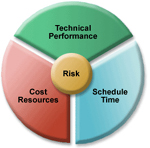
If you are not sure what Earned Value Analysis is all about then please look at my earlier post “What is Earned Value Analysis”.
Currently EVA has most traction in the US. This is due to the fact that the main project management institute defining best practice in the states (the PMI) have EVA as a major part of their project management syllabus. It was therefore no surprise to me that my first encounter with EVA was with Accenture and that most excellent subsidiary of theirs Avanade. Avanade use EVA as a key project monitoring and control strategy for the timely delivery-to-budget of fixed price projects.
Read more...

Click hear to get your free “ROI Project Template”
The theory behind the practical application of this template is explained in a previous clarety post entitled ROI IT Project Viability & Ranking.
The advantage of this template is that it takes into account the tangible and intangible benefits derived from a project into the calculation of a Projects ROI.
If you can suggest any improvement to this template please help others by making some comments.
This week I went to see a client about how to put in place a simple process for identifying those projects that are financially viable propositions and then ranking them in order of importance ?
At the outset it was clear that there was no easy answer to this common problem because most mechanistic approaches to ranking fail to take into account intangible benefits. Taking this into account we decided that the correct approach would be the use of a suitable project feasibility assessment framework combined with portfolio /programme governance to prioritise further those projects with difficult to measure intangible benefits.
The agreed framework we chose to use in order to identify viable projects and rank them was the tried and tested Rate of Return on Investment (ROI) method.
Read more...


 Del.icio.us
 Digg this



 All contents copyright © 2006, Orbital Media Network. All rights reserved.