How to Select a Benefits Measure?
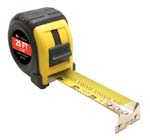
Before we can start discussing the “How” we need to first workout the “What”. In the context of Benefits Realisation Management (BRM) what do we mean by the word “Measure” :-
A measure is a metric whose change in the desired direction helps to confirm that the related benefit or dis-benefit is being realised.
In other words a measure is the thing which will be tracked and monitored in order to establish when a benefit has been realised (for example the production cost value). It is not:-
- The actual value i.e. £ 3million
- The Target Improvement i.e. – 30%
- The means of measurement i.e. financial review
- The benefit i.e. reduced production costs.
I find all too often in my travels that implementers of BRM get the above confused, which could be a key factor leading to the unsuccessful implementation of BRM.
Now that we understand the meaning of a benefit measure we need to explore and understand its key attributes and categories. If you take a look at our benefit profile template LINK you will see most of these attributes and categories listed. All of them require completion to allow effective monitoring and tracking of a benefits realisation to take place. These include:-
- Unit of measurement.
- Frequency measurement is required to be captured
- Measurement Method.
- Baseline Value (value before benefit realisation has begun
- Target Value.
- Beneficiary of the expected improvement.
- Person responsible for monitoring the measure.
- Improvement timescale i.e Qtr 1 or 2 etc.
- Owner of the benefit and accountable for its realisation.
Armed with the understanding of the features of a benefits measure and its common attributes and categories, we are now in a position to understand what constitutes a good benefits measure. At the highest level three key criteria need to be achieved before selecting an appropriate measure:-
- It must motivate behaviours in those responsible for realising and enabling benefits which will contribute to success.
- It must meet the needs of relevant stakeholders. They must agree!
- It must support and not hinder the benefit improvements goal.
In addition to these three high level criteria a good benefits measure needs to have the following additional low level features present :-
Relevance – Would the change in the benefits value be of interest to identified stakeholders or assist in the prediction of change in another related benefit measure?
In appropriate format – Would a ratio, fraction, percentage be a better indicator than an absolute value
Targetable – The benefit measure must be able to be used to set a target value which relevant stakeholders can use to agree a point at which a benefit has been fully realised.
Low Cost – A measure which is already tracked by the organisation or could be suitable for automated measurement via a computer.
Data Integrity – The measure needs to be as free as possible from intentional data corruption with the aim of spinning or corrupting the values.
Frequency – Will the measure be able to generate values in accordance with a frequency judged to be sufficient to determine progress and resultant trend.
Consistency – The data will be collected in a consistent way following an agreed and repeatable process of collection for a period valid in relation to the target date for benefit realisation.
Unambiguous – The measurement results need to be displayed in such a way that anyone can clearly understand what they mean and have the minimum potential for spin or misunderstanding.
Having an understanding of the common attributes /categories and features of a good benefits measure means you can then start the process of measure identification. The starting point of this process is the Benefits Map (please click for FREE Benefits Map Template). I normally build these in the first instance using Post-it notes as part of number iterative brainstorming workshops with key stakeholders. Participants must be educated beforehand about what benefits maps are, their importance and how they are constructed; which naturally involves an appreciation of what constitutes a good measure. Measure identification is intellectually demanding and time-consuming with each workshop typically taking half a day to complete.
At the end of each workshop one compiles a network of identified benefits and changes linked together in a number of cause and effect chains starting with quick wins (inter-mediate benefits) on the left through to the end benefits on the right which must all link back to the identified programme objectives and these, in turn, must relate to the agreed vision. This can be seen in the example detailed below:-
One chain from a potential Benefits Map for the 2012 Olympic Stadium Programme
As each benefit map takes shape during these iterative workshops benefit profiles need to be completed for each intermediate and end benefit identified. Completing each benefit profile involves the specification of a measure or measures for each benefit along with further attributes and categories mentioned earlier in this post. The completion of benefits profiles usually generates two key challenges:-
a) How many benefits should we measure?
b) How many measures per benefit?
In answer to the first question, many organisations consider it impractical to measure more than three to six benefits per map, or change initiative. In my view this is not the best approach /attitude to take if you want BRM to deliver meaningful added value results. All benefits should be tracked if they are to be realised but sometimes benefits may be just too costly or difficult to measure and the best compromise is to measure benefits either side of the difficult ones.
The number of measures per benefit is likely to vary and will depend on the wording of the benefit. Although it would be convenient if there were a single measure for each benefit, the wording often implies several aspects of improvement and therefore the potential of multipal benefit measures. For example, the benefit “increased sales” suggests both increased volume and value of sales so at least two measures are required with baselines and targets needing to be set for both. Sometimes this need for two measures indicates that the intermediate benefit is in fact two benefits and should be split. However, if the benefits so split are dependent on the same change or prior benefits it is often simpler for the benefits to remain combined. This also makes sure the benefit map is less cluttered and easy to read.
Quite apart from benefit wording another determinate of the number of benefit measures could be specific needs of stakeholders and the balancing of measures so that they are complementary or opposing.
Consider the benefit “improving our email response to product complaint”
a) Number of emails sent before a response per complainant
b) Time elapsed in answering the mail
c) Time elapsed before satisfactory conclusion of the complaint
d) Friendliness of the response
e) Quality of the written responses
f) The number of mails never answered
g) Average number of mails waiting to be answered
h) Number of mails responded to each day
i) Number of successfully concluded complaints per day
Which measure you chose depends on which stakeholder. The complainant is interested in (a) to (e) whilst the complaints manager would be more interested in (f) to (i).
Therefore, once the benefit owner has been identified this is the stakeholder view you adopt in terms of measures to be used which should help reduce the number of possible measures of 9 in the above example to 4 or less if the benefit owner is the Complaints Manager. Benefit ownership is one of the best ways of reducing the number of measures down to a sensible and manageable level of 1 to 4. If this fails to achieve a reduction then further filtering out of candidate measures could be achieved on the basis of ease and cost of measurement.
It is important to note that this whole process of benefit mapping and benefit profiling is best handled through carefully structured and well facilitated workshops whose participants must include key stakeholders. It is important to note that these workshops are part of an iterative BRM process of constantly revising /rationalising benefits maps and associated profiles until they correctly represent the views of the stakeholders. Much of this revision process often centres on the wording of each benefit which, as mentioned earlier, can cause a benefit to be split in two or remain as one. Either way wording changes often impact the identification of an appropriate benefit measure and the ownership of the benefit once defined.
Good luck with your next BRM workshop 
This entry has been viewed 1488 times.
READER COMMENTS:


 ) and to track the progress toward achieving those benefits. This allows everybody to see in real-time how you are tracking, even external stakeholders.



 All contents copyright © 2006, Orbital Media Network. All rights reserved.
Of course the problem with stakeholders is the fact that there are normally more than one and they typically have competing goals. This makes it more difficult to decide on the correct measures.
Another approach is to first agree the overall strategy of the organisation (or programme) and then to “measure” each measure against those agreed priorities.
Posted by Bruce on Thu 20th November 2008 at 08:27 AM | #